Nettoyant dégraissant toute surface/en
Tuto — Difficulté : Tres facile — Durée : 1 minute(s) — Coût : 1 EUR — Mise à jour : 10 juillet 2024 — 23 révision(s) — Licence : Attribution (CC BY)
Aires : Habitat Hygiene — Contributeurs : EKO!
Fiche reformulée à partir du wiki Low-tech Lab : voir la fiche originale ↗
Versions de cette fiche : AR EN FR
Introduction
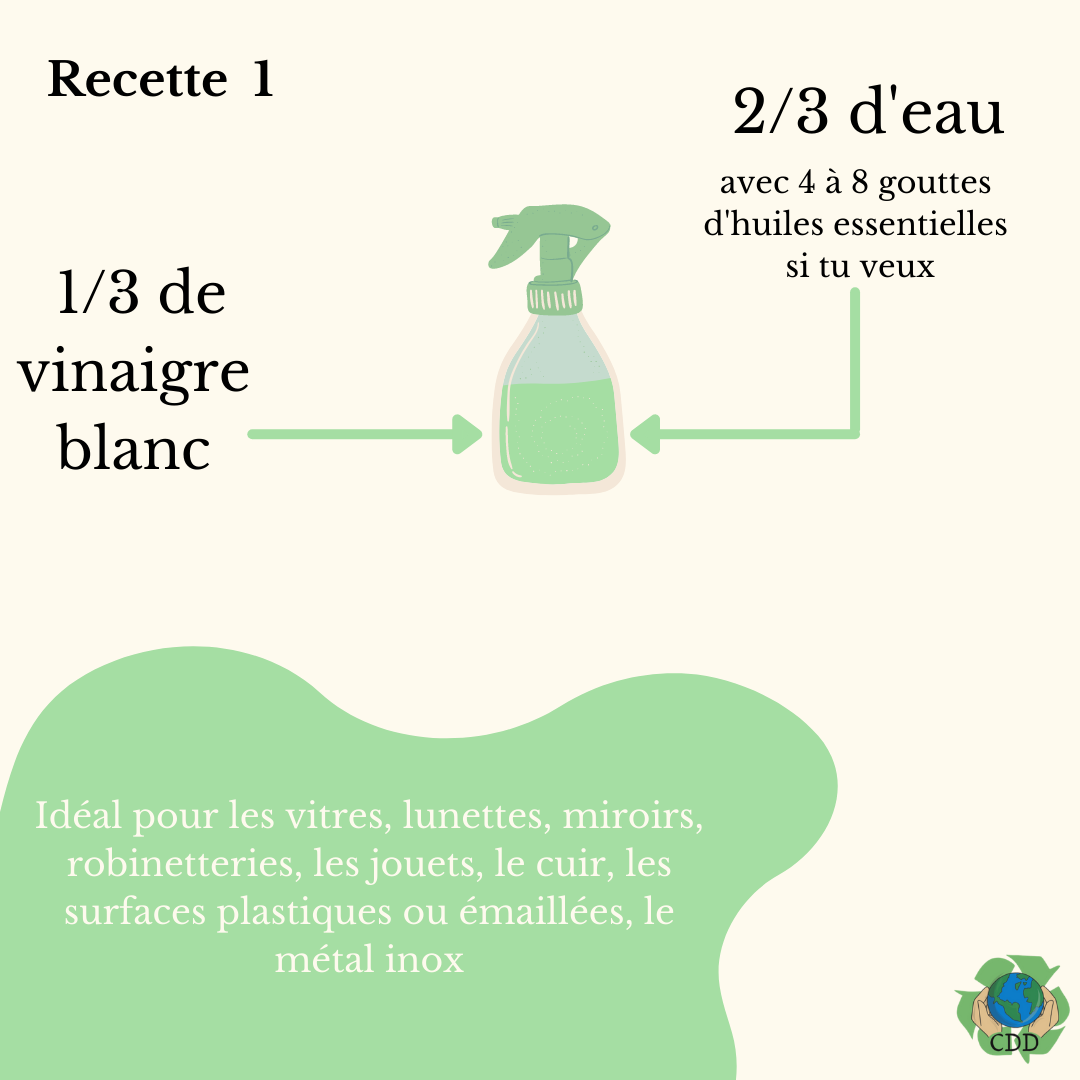
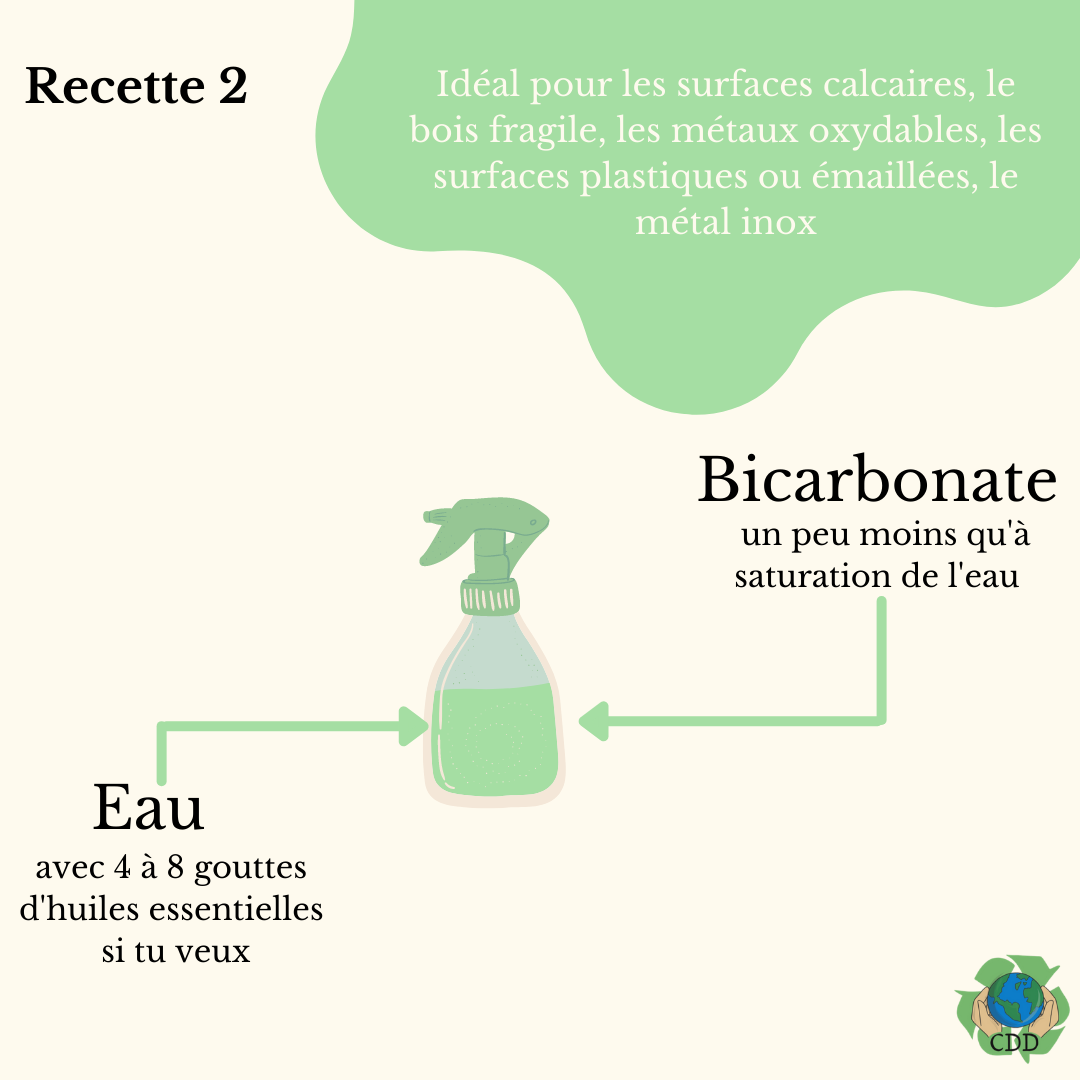
Both products can be used to clean any greasy surface, although it's best to choose one over the other depending on the surface. * Vinegar cleaner: for windows, glasses, mirrors, taps, baby/children's toys and leather. * Bicarbonate cleaner: for hard surfaces, fragile wood, oxidisable metals, etc. * One or the other: for plastic, enamel and stainless steel surfaces. These recipes contain just two 100% biodegradable and natural ingredients, making them economical, quick and easy to use and replace a large number of harmful industrial cleaning products. To compare and understand the dangers of most industrial products, take a look at the UFC Que Choisir guides.
Description
2 quick, 100% biodegradable, no-rinse, all-surface degreasing cleaner recipes: one with white vinegar and the other with vinegar
Details of ingredients
*White vinegar: White vinegar, otherwise known as spirit vinegar, crystal. It is a 100% natural and biodegradable product with a pH between 3.5 and 5 (acid) with approximately 12% alcohol, obtained by macerating an aqueous solution of at least 6% acetic acid (often from beet ethanol). It evaporates naturally without posing any risk (apart from a slight and temporary irritation of the throat and eyes if you are in a small space). Cost : ~ 0.40€/L, prefer to buy in the food vinegar section (avoid the household section as it is often more expensive and flavoured). Properties: More info and G culture here **Degreaser, **Deodorising, **Conservative (thanks to the acidic pH), **Antiseptic, disinfectant, antiparasitic, antibacterial, antifungal (thanks to the acid pH) **Descaler / anti-scale (the acid reacts with the scale to make it disappear in an acid-base reaction causing heat and CO2 bubbles), **Corrosive for limestone surfaces (and damages wood in high doses). *Sodium bicarbonate: also known as sodium bicarbonate, sodium hydrogen carbonate, sodium hydrogen carbonate, sodium hydrogen carbonate, monosodium carbonate, sodium bicarbonate, soda, baking soda or natrum bicarbonatum. A fine white powder similar to table salt or talc with a pH of 8-8.5 (base). Made from limestone and salt, bicarbonate is naturally present in the body and is harmless to health. Does not give off any fumes, does not evaporate. Properties: cleans, scours and deodorises. It dissolves grease and proteins responsible for stains. It prevents the proliferation of bacteria and softens hard water. More info and G culture here Cost : ~3-4 euros/kg Here we'll be using household bicarbonate (cheaper than baking soda, but if you only have baking soda for food or cosmetics on hand it works very well). .
Vinegar multi-purpose cleaner
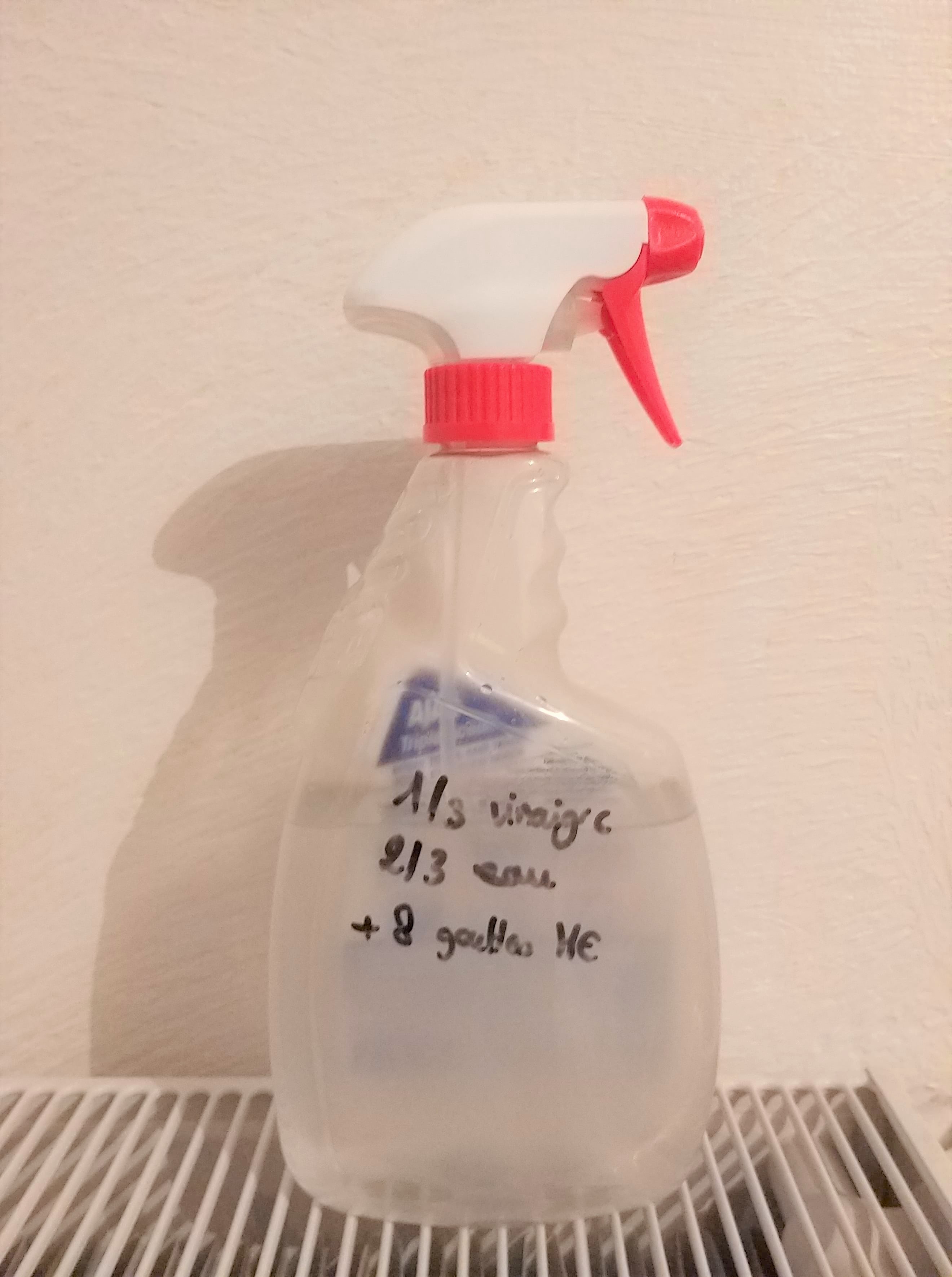
Mix 1/3 volume of white vinegar with 2/3 volume of water. Optional: to add fragrance, you can replace some of the water with hydrosols OR add 4-8 drops of essential oils per 1 litre.
Bicarbonate multi-purpose cleaner
Mix bicarbonate and cold water until the water is saturated, then add a little more water. It's important to add more water, otherwise the saturated liquid will recrystallise in the nozzle and end up clogging it. Optional: to add fragrance, you can replace some of the water with hydrosols OR add 4-8 drops of essential oils per 1 litre.
← Retour au répertoire — Fiche originale sur wiki.lowtechlab.org ↗